Ramin Akbari
Hey there! I am a Ph.D. student in Computer Science and Engineering at Michigan State University, advised by Dr. Vishnu Boddeti. I work on statistical machine learning with a primary focus on the mathematics of controlling representations. My research aims to develop algorithms that mitigate bias in AI models, improve fairness, protect data privacy, and advance safe and trustworthy AI systems.
I also have background in computational mechanics, specifically working with the eXtended Finite Element Method (XFEM), computational homogenization and the constitutive modeling of hyper-elastic material.
- Ph.D. Student in Computer Science | Michigan State University
- M.Sc. in Structural Mechanics | Sharif University of Technology
- B.Sc. in Civil Engineering | University of Tehran

📢 News
Jan 2026
Extended my internship at Sartorius for the spring semester.
Sep 2025
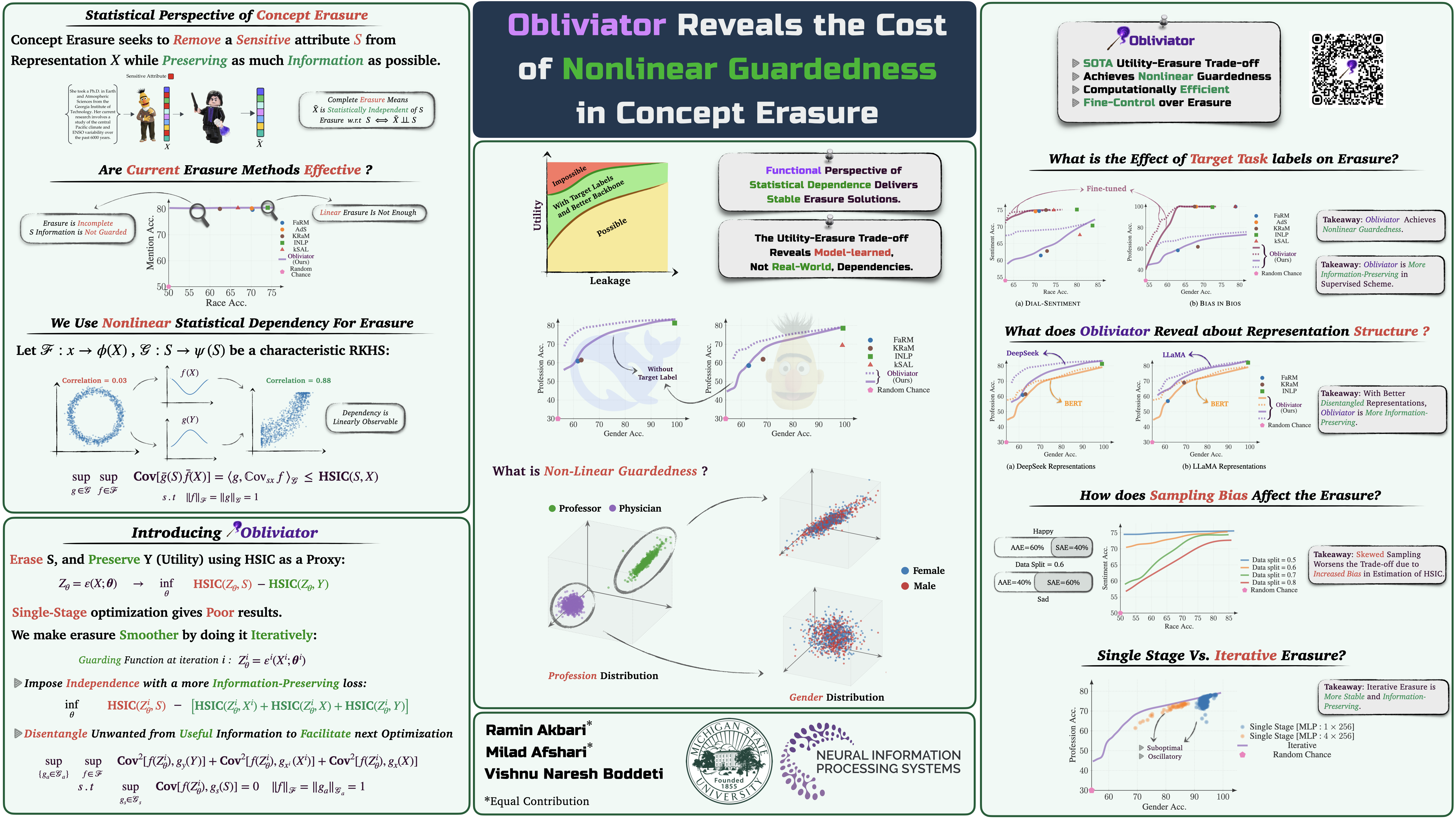
Our paper Obliviator Reveals the Cost of Nonlinear Guardedness in Concept Erasure was accepted to NeurIPS 2025!
Aug 2025
Started my internship at Sartorius in Ann Arbor.
Jun 2025
Our paper Homomorphically Encrypted Biometric Template Fusion and Matching was accepted to TBIOM!
📝 Selected Publications
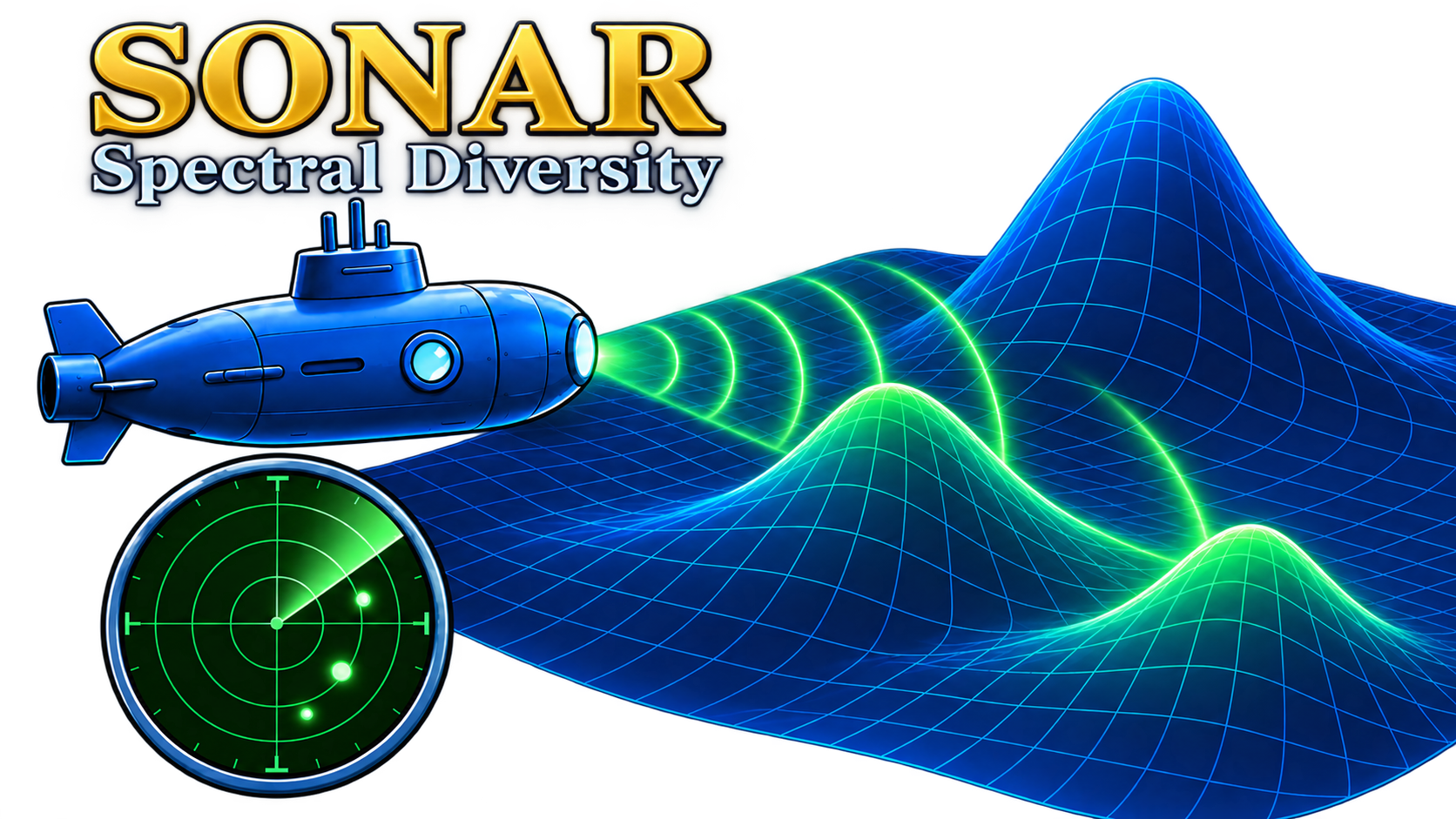
SONAR: Spectral Diversity for Lost Reasoning Modes in Masked Diffusion LMs
Ramin Akbari, Mashrur Morshed, Vishnu Boddeti
In this work, we present SONAR, a method that helps masked diffusion language models explore reasoning strategies they often overlook. When generating multiple solutions to the same problem, these models can repeatedly follow the same unsuccessful approach. SONAR uses spectral analysis to measure overlap between the model’s internal representations of these solutions. It sends this information back through the model as a diversity signal, adjusting the samples’ representations to encourage different reasoning paths without changing the model’s weights. In coding and mathematics experiments, SONAR solves more problems and uncovers a wider range of valid strategies, suggesting that some reasoning abilities are already present but difficult to access through ordinary sampling.

Obliviator Reveals the Cost of Nonlinear Guardedness in Concept Erasure
Ramin Akbari*, Milad Afshari*, Vishnu Boddeti
Advances in Neural Information Processing Systems (NeurIPS), Dec 2025
In this work, we present Obliviator, a method for performing concept erasure on pre-trained language models. Concept erasure poses two central challenges: first, capturing all types of dependencies between the concept and the learned representation; and second, keeping unrelated information intact. Obliviator addresses the shortcomings of current methods by guarding concepts against nonlinear adversaries while preserving more information for the same level of concept leakage compared to baselines, setting a formidable benchmark for the utility-erasure trade-off.